Best Cure and Seal for Concrete: Top Protective Sealers
Choosing the right cure and seal product helps concrete cure properly, resist moisture, and preserve appearance. This guide highlights five reliable options for interior and exterior projects, focusing on penetration, gloss, durability, and food-safety considerations for countertops or prep surfaces. Each item is evaluated on ease of application, curing performance, and long-term protection against water, salts, and weathering.
Product Summary
| Product | Brand | Type | Key Benefit | Approx. Coverage |
|---|---|---|---|---|
| Siloxa-Tek 8500 Ready to Use | Ghostshield | Water-based penetrating sealer | Breathable, DOT approved, resists chlorides and de-icing salts | Varies by surface |
| Walttools CAS 150 Cure and Seal (5 Gallon) | Walttools | Breathable cure & seal | Abrasion resistance, reduces porosity, economical | Large areas |
| Armor WB25 Water Based High Gloss | Foundation Armor | Water-based cure & seal | High gloss finish, helps curing, ASTM compliant | Various |
| McKinnon Concrete Sealer, Paver Sealer (5 Gallon) | McKinnon Materials | Water-based acrylic sealer | No peeling or cracking; versatile substrates | Expect long wear |
| Concrete Countertop Water Based Sealer XS-327 Matte | GlobMarble | Water-based sealer | Matte finish, strong moisture barrier | Countertops, tables |
Siloxa-Tek 8500 Ready to Use — 1 Gallon Sealer
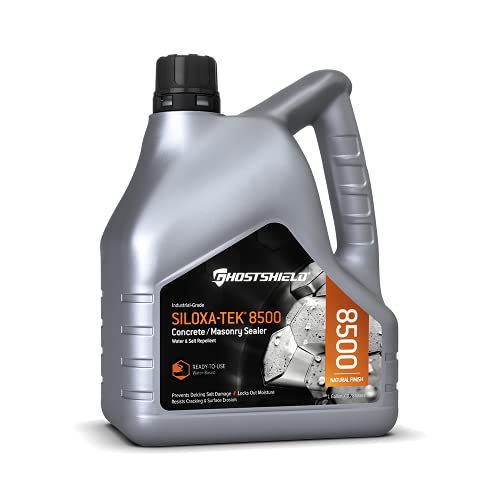
Siloxa-Tek 8500 is a water-based penetrating sealer designed to reduce water and moisture intrusion in concrete, brick, masonry, and pavers. It does not alter the natural appearance of the substrate and remains breathable, helping to prevent peeling or flaking. As a DOT-approved formulation, it also resists surface damage from chlorides and deicing salts, supporting long-term durability in outdoor settings. The product offers six times higher actives than typical water-based sealers for lasting penetration and performance against wind-driven rain.
Walttools CAS 150 Cure and Seal (5 Gallon)
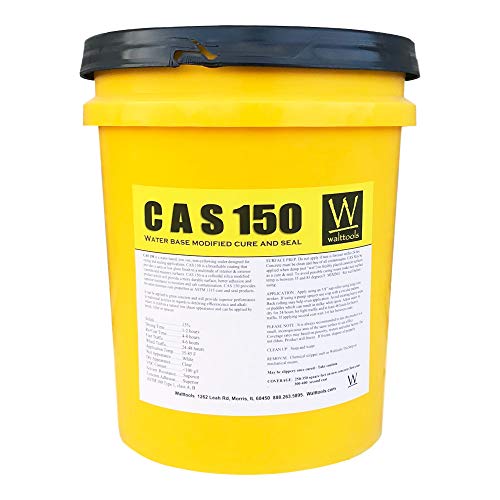
CAS 150 Cure and Seal provides a breathable satin finish on interior and exterior concrete and masonry. The product uses a high-grade acrylic resin that resists yellowing and enhances abrasion resistance with modified colloidal silica. It reduces surface porosity and stands up to winter chemical exposure from salt and de-icers. This option is often the most economical Cure & Seal choice for larger projects, delivering practical durability with straightforward maintenance.
Armor WB25 Water Based High Gloss

Armor WB25 is a professional-grade water-based sealer that doubles as a cure and seal, suitable for new and existing concrete and pavers. It yields an attractive high-gloss finish and aids proper curing on fresh slabs. The formulation is designed to meet relevant standards and is designed to provide strong resistance to surface wear, with coverage expectations varying by surface roughness and porosity. This option is well-suited for decorative concrete and high-traffic areas needing a strong gloss.
McKinnon Concrete Sealer, Paver Sealer (5 Gallon)

The McKinnon Concrete Sealer is a water-based acrylic sealer designed for both indoor and outdoor surfaces, including concrete, pavers, stone, brick, and stucco. The product is formulated to resist peeling and cracking, offering durability across a wide range of substrates. It is intended for versatile use, from driveways and patios to pool decks, making it suitable for projects requiring robust protection without a glossy finish.
GlobMarble Concrete Countertop Sealer XS-327 Matte

GlobMarble XS-327 is a matte, water-based sealer designed for countertops and architectural concrete applications. It provides excellent heat resistance, quickly dries to a semi-gloss-free matte barrier that protects against moisture and most stains. The product is formulated as a membrane-forming curing compound and sealer, with a recommended mixing ratio to achieve the desired protection level. It is especially suited for architectural projects seeking a durable, non-glossy finish.
Buying Guide: Key Considerations For Curing And Sealing Concrete
- Surface type and porosity: Porous concrete, pavers, and masonry benefit from deeper penetration sealers; dense surfaces may require surface-saturation sealers for uniform protection.
- Breathability vs. film-forming protection: Breathable sealers prevent moisture buildup and efflorescence, while film-forming products can enhance gloss and stain resistance but may peel if moisture is trapped.
- Cure vs. seal timing: Some products serve as both cure and seal, helping early strength development on fresh concrete. For existing slabs, choose a dedicated sealer.
- Gloss level and appearance: High-gloss finishes emphasize a polished look, while matte finishes maintain a natural, non-glossy appearance. Select based on desired aesthetics and use-case.
- Durability and chemical resistance: Consider de-icer salts, weather exposure, and heavy traffic. Products with silica additives or acrylic resins typically offer improved abrasion and chemical resistance.
- Food safety considerations: For countertops and food-prep areas, verify food-safe labeling and solvent-free formulations to minimize risks.
- VOC content and environmental impact: Low-VOC and breathable formulas are preferable for indoor projects and for users seeking greener options.
- Application specifics: Some sealers require multiple coats, curing times, or specific temperatures. Follow manufacturer instructions for best results.
- Maintenance: Sealed surfaces may require periodic re-application. Consider products with easy touch-ups and long re-coat intervals.
- Compatibility: If applying over previously sealed surfaces, confirm compatibility to avoid peeling or uneven finish.
Choosing the right cure and seal product depends on substrate, location, and ongoing maintenance plans. For outdoor applications with chloride exposure or freeze-thaw cycles, a penetrating sealer with high actives and breathability is often preferred. For countertops or indoor surfaces, a food-safe or matte finish may be prioritized, along with durability and heat resistance. When evaluating options, compare penetration depth, curing support, gloss level, and long-term protection against moisture and chemicals.