Best Swimming Pool Hardness Increaser for Clear Water and Protected Surfaces
Choosing the right calcium hardness increaser helps maintain balanced pool water, protect surfaces, and extend equipment life. This guide highlights five top options, outlining key features and how they support water chemistry. Read on to compare effectiveness, application ease, and compatibility with common pool types.
| Product | Brand | Recommended Use | Size | Key Benefit |
|---|---|---|---|---|
| Clorox Pool&Spa Calcium Hardness Increaser | CLOROX Pool&Spa | Prevents corrosion, etching, and staining | 4 lb | Restores low hardness for balanced water |
| Robelle Premium Pool Calcium Up | Robelle | Rapid hardness increase | 16 lb | Supports corrosion/etching prevention |
| In The Swim Calcium Hardness Increaser | In The Swim | Fast-acting hardness boost | 25 lb | Quickly stabilizes calcium levels |
| TropiClear Pool Calcium Hardness Increaser | TropiClear | Protects surfaces and equipment | 8 lb | Premium-grade calcium chloride for longevity |
| HTH Calcium Hardness Up | HTH | Protects pool surfaces and liners | 4 lb | Raises calcium hardness for non-corrosive water |
Note: The products listed here are widely used to raise calcium hardness in residential pools and hot tubs. Always follow label directions and test water parameters before and after adding any chemical to ensure optimal balance.
Clorox Pool&Spa Calcium Hardness Increaser
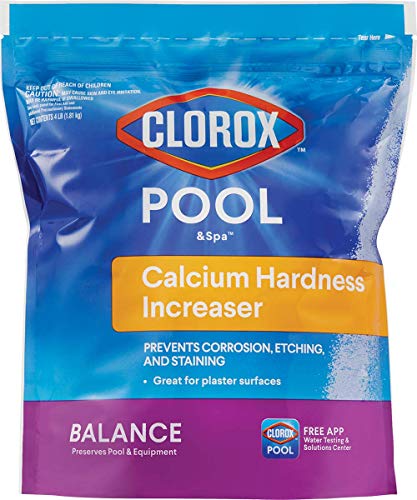
Clorox Pool&Spa Calcium Hardness Increaser is designed to address low total hardness in pool water, helping to prevent corrosion and protect surfaces. Its use supports a stable, balanced environment ideal for long-term equipment protection. The product is intended to raise calcium levels gradually to restore ideal ranges and maintain water clarity. By keeping hardness within recommended ranges, pool owners can reduce maintenance needs and extend the life of plaster, tiles, and metal components.
Robelle 16-Pounds Premium Pool Calcium Up

Robelle Calcium Up rapidly increases total hardness, helping to prevent corrosion and etching of pool surfaces. The 16-pound size makes it suitable for mid-sized to larger pools or households with regular pool maintenance routines. This increaser is formulated to deliver a steady rise in calcium levels, supporting clearer water and more stable chemistry over time. It’s compatible with common pool sanitizers and other standard chemical treatments when used as directed.
In The Swim Calcium Hardness Increaser

In The Swim Calcium Hardness Increaser offers a fast-acting solution with a 94% calcium chloride composition. The 25-pound bag is designed for households with larger pools or frequent chemical adjustments. The granules dissolve quickly and evenly when circulated, facilitating a smooth increase in calcium hardness and helping protect pool surfaces and equipment from damage caused by low hardness levels. This product emphasizes ease of use and quick results for busy pool owners.
TropiClear Pool Calcium Hardness Increaser
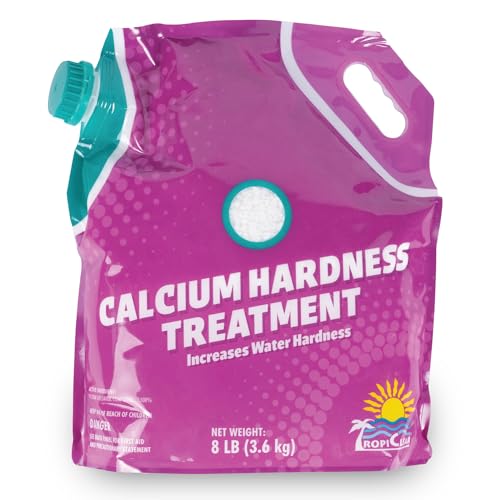
TropiClear Calcium Hardness Increaser protects pool surfaces by maintaining proper calcium levels. The 8-pound formula is designed to be fast-acting and effective across pools, hot tubs, and spas. It focuses on preventing corrosion and etching while supporting overall water clarity and comfort. The product uses premium-grade calcium chloride to ensure reliable results and consistent water balance for aging or high-usage pools.
HTH Calcium Hardness Up

HTH Calcium Hardness Up raises calcium hardness levels to protect pool surfaces and equipment from corrosive water. The four-pound package is compact and easy to store, making it suitable for smaller or seasonal pools. This product is designed to work with a range of pool care regimes and is compatible with standard sanitizers while helping to stabilize water chemistry during balancing efforts.
Pool Mate 8-Pounds Premium Calcium Hardness Increaser

Pool Mate 8-Pounds Premium Calcium Hardness Increaser provides a robust calcium chloride formulation to rapidly raise hardness. The 8-pound package is well-suited for home pools that require quick adjustments after testing shows low calcium levels. This product aims to prevent corrosion or etching by maintaining a stable calcium supply, supporting long-term pool integrity and water clarity when used with proper dosing and circulation.
Buying Guide: Key Purchase Considerations
- Pool size and current hardness: Select a product size that aligns with your pool’s volume and how quickly you need to raise calcium levels. Larger pools may require bigger bags or multiple applications.
- Calcium chloride formulation: Most hardness increasers use calcium chloride. Look for high-purity formulas to minimize impurities that could affect water balance or pH stability.
- Dissolution rate and ease of use: Fast-dissolving granules simplify application. Some products advertise rapid results, while others emphasize gradual stabilization.
- Compatibility with existing chemistry: Ensure the increaser pairs well with your sanitizer, pH balancers, and algaecides. Always test water before and after treatment.
- Surface protection emphasis: If you have plaster, tile, or vinyl liners, select a product that explicitly mentions surface protection to reduce corrosion and scaling risks.
- Storage and handling: Check bag size, weight, and storage requirements. Calcium chloride can be hygroscopic, so keep it in a dry place and sealed.
- Maintenance cycle: Consider how often you test and adjust calcium hardness. Some pools benefit from a scheduled monthly adjustment, others from as-needed dosing.
- Cost-per-use and recycling: Compare cost-per-pound and the number of applications you can perform before restocking to optimize long-term budgeting.
- Pool type considerations: Concrete, fiberglass, vinyl, hot tubs, and spas can have slightly different responses to hardness changes. Follow manufacturer guidance for best results.
The right calcium hardness increaser helps maintain water balance, prevents equipment wear, and preserves surface integrity. Always begin with accurate water testing, follow label directions, and adjust gradually to avoid overshooting target hardness levels.