Best Treatments for Yellow Algae in Pools: Top Algaecides
Yellow and mustard algae can be stubborn in both above-ground and in-ground pools. The right algaecide, used correctly with proper pool maintenance, helps restore clarity and prevent blooms. This guide presents five effective products designed to combat yellow algae and protect your water quality. Each option highlights how it works, what type of pool it suits, and general usage tips to maximize results.
| Product | Brand | Key Benefit |
|---|---|---|
| United Chemicals Yellow Treat 2 Pound Container | United Chemical | Powerful algaecide for yellow/mustard algae; treats large volumes |
| United Chemicals Yellow Treat 2 lb – YT-C12 – 2 PACK | United Chemical | Two-pack option for bigger pools or recurring treatments |
| In The Swim Super Algaecide for Pools – 1 Quart | In The Swim | High-concentration copper-based formula for persistent blooms |
| United Chemicals YTP71 5oz Bag Yellow Treat | United Chemical | Compact, fast-acting yellow algae killer for quick restorations |
| Clorox Pool & Spa Algaecide and Clarifier – 128 Oz | CLOROX Pool&Spa | Combination algaecide and clarifier for ongoing clarity |
The table above highlights five effective options to consider when treating yellow algae in pools. Each product offers distinct strengths, such as volume efficiency, rapid action, or compatibility with different sanitizers. Use the table to compare how much product you need and how it fits your pool type and maintenance routine.
United Chemicals Yellow Treat 2 Pound Container

Yellow Treat is presented as a trusted yellow algae removal product. It acts as a non-toxic algicide suitable for both pools and spas. The 5-ounce dose treats up to 10,000 gallons, enabling targeted application for medium to large pools. The product’s emphasis on safety and effectiveness makes it a common choice for homeowners seeking straightforward treatment against mustard algae blooms. For best results, apply according to pool volume and follow with standard shocking and filtration adjustments as needed.
United Chemicals Yellow Treat 2 lb – YT-C12 – 2 PACK
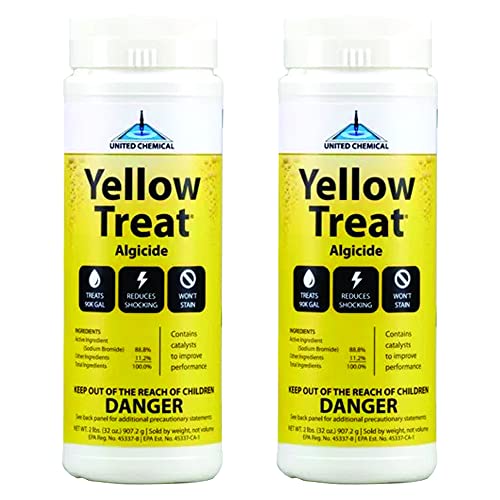
This two-pack provides an economical option for larger pools or ongoing management. The product is described as a rescue treatment to control blooms of yellow and mustard algae in any pool or spa. It’s notable for its historic role in sodium bromide-based algaecide formulations. The typical application is a 5-ounce dose that covers about 10,000 gallons, making it convenient for regular maintenance or a single, decisive treatment during bloom events.
In The Swim Super Algaecide for Pools
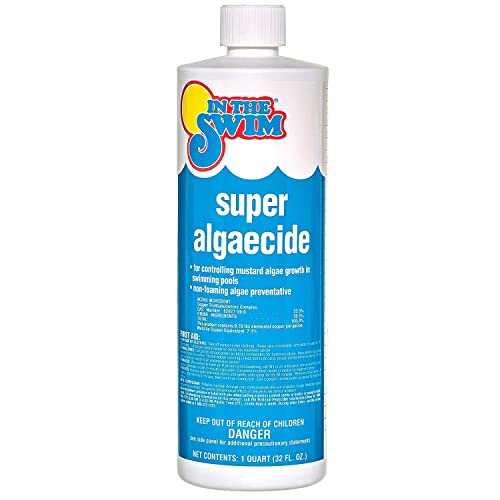
In The Swim offers a high-concentration, copper-based algaecide designed for either above-ground or in-ground pools. The product is described as effective for maintenance and spring openings, helping to reduce algae growth over time. It is formulated to work with various sanitizers and pool types, including chlorine, saltwater, bromine, ozone, and minerals. The stain-prevention components help mitigate copper-related staining when used correctly, making it a versatile choice for regular pool care and early-season start-ups.
Clorox Pool & Spa Algaecide and Clarifier

Clorox Pool & Spa combines algaecide with a clarifier to treat existing algae while helping maintain long-term clarity. It’s designed to target multiple algae types, including green, mustard, and black algae, providing a broad defense. The non-foaming formula reduces maintenance hassles and supports clearer water. This option is suitable for homeowners seeking a dual-action solution that also aids in filtering out algae particles for faster recovery after treatment.
United Chemicals SWAM-C12 Swamp Treat Pool Algae Eliminator

Swamp Treat is marketed as a powerful algae eliminator that accelerates the pool’s chlorine effectiveness against blooms. It is positioned for heavy algae pressure situations and aims to speed up the reduction of yellow/mustard algae by enhancing chlorine’s ability to combat growth. This product is often favored when algae levels are high and quick results are desired, though correct dosage and compatibility with existing sanitizers should be observed.
Buying Guide: Key Purchase Considerations
- Pool type and sanitizer compatibility: Check if the product works with chlorine, bromine, salt systems, or combinations thereof. Some formulas are designed specifically for saltwater pools or for use with certain sanitizers.
- Algae type targeted: Yellow/mustard algae requires algaecides with proven efficacy against those blooms. Consider products that explicitly mention yellow or mustard algae in their claims.
- Application and dosage: Note the recommended dose per 10,000 gallons and whether the product is a one-time treatment or a maintenance option. Some are turn-key while others require ongoing dosing.
- Volume and cost efficiency: For large pools, multipack options or larger containers may offer better value. Compare the total gallons covered per container to determine cost effectiveness.
- Stain risk and compatibility: Copper-based formulas can stain if overused or poorly balanced. Choose products with stain-prevention features if your pool has a history of staining.
- Ease of use and maintenance: Some products double as clarifiers or help with filtration, reducing overall maintenance time. Foam-free or low-odor options may be preferable for indoor or covered pools.
- Open-only considerations: Consider seasonality and pool opening timing. Some algaecides are best applied during spring openings or after deep cleaning when algae pressure is high.
- Safety and handling: Follow label directions for storage, contact with skin and eyes, and the need for protective equipment during application.
- Long-term maintenance plan: Identify whether a product supports ongoing prevention after initial cleanup, minimizing recurrence of yellow algae blooms.
When choosing among these options, align your choice with pool size, sanitation method, maintenance habits, and any prior algae history. For best outcomes, perform a thorough brush and vacuum of affected areas before applying algaecide, then run the filtration system continuously for 24–48 hours as recommended. Regular testing of chlorine and pH levels after treatment helps ensure the algaecide remains effective without causing imbalance.